Seed selection
The process starts with Nigella sativa seeds. Identity, condition and freshness of the raw material matter before extraction ever begins.

THE COMPLETE GUIDE
A practical guide to Nigella sativa, how black seed oil is made, what thymoquinone means, how to compare oils and where traditional context meets modern testing.
BLACK SEED 101
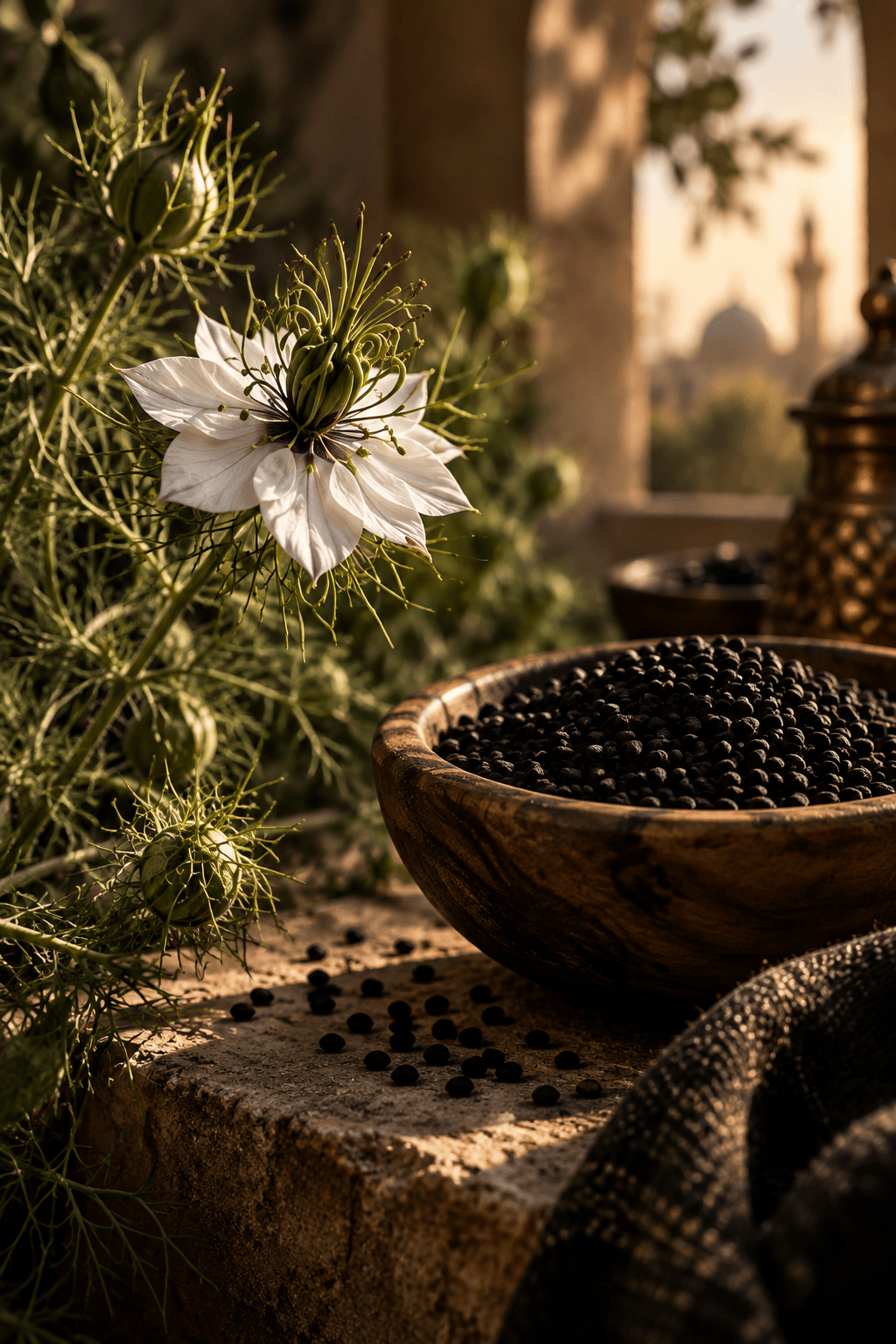
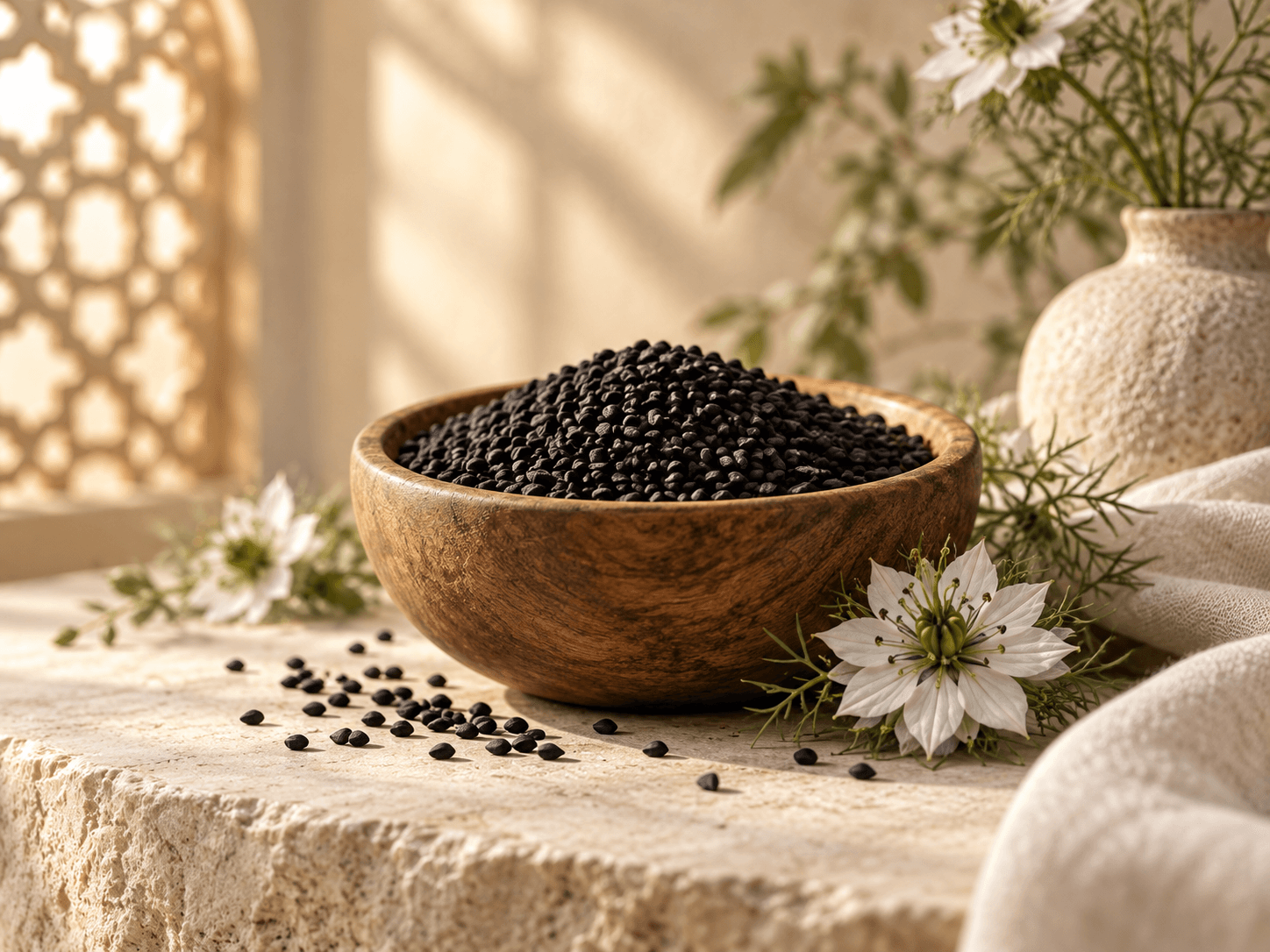
Black seed oil is oil pressed from the dark seeds of Nigella sativa, an annual flowering plant in the buttercup family, Ranunculaceae.
The oil is commonly sold under several closely related names, including black seed oil, black cumin seed oil and Nigella sativa oil. For a shopper, the clearest identifier is the botanical name on the ingredient list: Nigella sativa.
The seeds have a long culinary and traditional history across regions of the Middle East, North Africa, South Asia and beyond. Modern interest has also led researchers to study the seed, its fixed oil and compounds associated with it, including thymoquinone.
KNOW THE BOTANICAL
Common names are useful, but they can be imprecise. Black seed and black cumin are widely used names for Nigella sativa. Ordinary culinary cumin, however, is a different plant: Cuminum cyminum.
That is why the botanical name matters when comparing oils. If you are specifically looking for black seed oil, the ingredient declaration should identify Nigella sativa.
FROM SEED TO OIL
The details vary by producer, but a minimally processed oil generally moves through a straightforward sequence from seed preparation to pressing, filtration and protective packaging.
The process starts with Nigella sativa seeds. Identity, condition and freshness of the raw material matter before extraction ever begins.
Cold pressing generally refers to mechanical extraction intended to avoid the high-temperature refining used in some oil processes.
Pressed oil can be allowed to settle and/or filtered to remove seed particles while keeping the product an unrefined oil.
Packaging and storage should help limit unnecessary exposure to light, heat and air after pressing.
Mechanical pressing still creates friction and processing conditions vary. Treat “cold-pressed” as one useful piece of product information, not a complete quality certificate by itself.
ONE MEASURABLE CONSTITUENT
Thymoquinone, usually shortened to TQ, is a naturally occurring constituent associated with Nigella sativa and one of the compounds most frequently discussed in scientific research on black seed.
A laboratory can measure TQ in a sample using an analytical method such as UPLC. That gives a useful data point about the sample tested—but it does not turn one percentage into a full score for the oil.
TQ is one measurable characteristic. Ingredient identity, sourcing, freshness, extraction, handling, storage and purity are separate questions worth asking too.
The 2.35% result applies to the Hadith Organics sample analyzed in Eurofins report 4940074-0, dated May 28, 2025. It is not presented as a guarantee that every bottle contains exactly the same percentage.
WHAT RESEARCH CAN — AND CANNOT — SAY
Nigella sativa, its oils, extracts and thymoquinone have been studied in laboratory experiments, animal research and human clinical studies. The literature is broad, but the preparations, doses, populations and study quality are not all the same.
Reviews of the clinical literature repeatedly note the need for better-standardized trials and clearer characterization of the products being studied. For that reason, we separate educational discussion of research from claims about what a bottle will do for an individual person.
BUYING GUIDE
Quality is easier to evaluate when you break it into several questions instead of looking for one magic number or one badge.
Look for Nigella sativa on the ingredient list. Common names can overlap, but the botanical name is specific.
A single-ingredient black seed oil should make it easy to see exactly what is in the bottle and whether anything has been added.
Cold-pressed and unrefined describe processing choices. They do not replace information about sourcing, freshness or handling.
A named laboratory, method, report number and actual document are more useful than a vague tested-for-quality badge.
Thymoquinone is measurable and useful to discuss, but one percentage cannot summarize the entire quality of a finished oil.
Light, heat and repeated air exposure can work against freshness. Packaging and storage are part of quality too.
AFTER YOU BUY IT
Oils are sensitive products. Keep black seed oil tightly closed and away from direct light, excessive heat and repeated air exposure. Always follow the storage directions on the bottle you purchase.
Aroma, flavor and appearance can naturally vary between oils and batches. An unusually strong marketing claim is not a substitute for clear product information and sensible handling.

ISLAMIC TRADITION
Black seed has a distinct place in Islamic tradition. Hadith Organics takes its name from that heritage while keeping a clear line between a traditional religious text and a modern medical claim.
إِنَّ فِي الْحَبَّةِ السَّوْدَاءِ شِفَاءً مِنْ كُلِّ دَاءٍ إِلَّا السَّامَ
“There is healing in the black seed for every disease except death.”Sahih al-Bukhari 5688 · Sahih Muslim 2215
We present the hadith as part of the historical and religious context of black seed. It is not used here as a guarantee that a modern commercial product prevents, treats or cures disease.
THE HADITH ORGANICS APPROACH
100% Nigella sativa black seed oil.
Presented as cold-pressed and unrefined.
Eurofins report number, method and COA are shown openly.
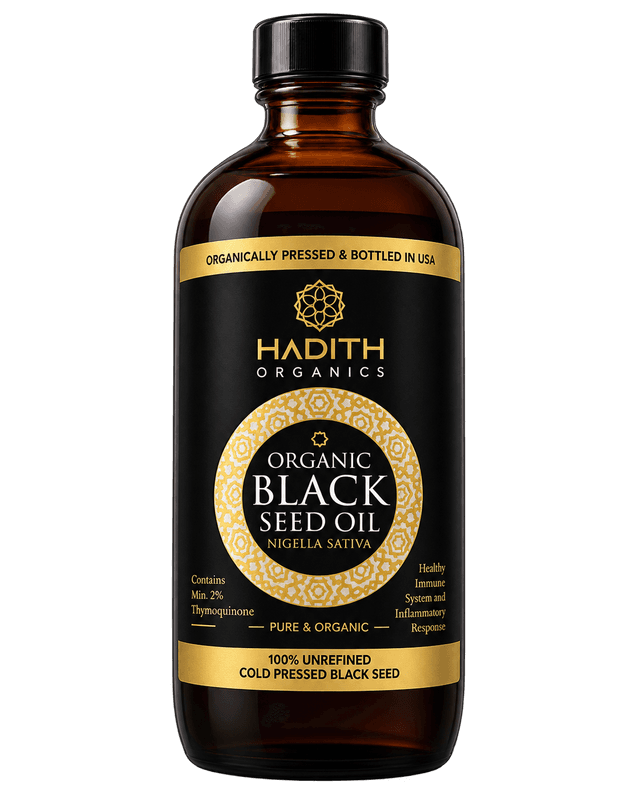
Product information, independent testing and the full Certificate of Analysis in one place.
VIEW BLACK SEED OIL →BLACK SEED OIL FAQ
This guide is educational. For questions about using black seed oil with a medical condition, medication, pregnancy or a specific treatment plan, speak with a qualified health professional.
Black seed oil is oil pressed from the seeds of Nigella sativa, an annual flowering plant in the Ranunculaceae family. It is also commonly called black cumin seed oil.
The names are commonly used for oil from Nigella sativa. Nigella sativa is different from ordinary cumin, Cuminum cyminum, so checking the botanical name is the clearest way to know what you are buying.
Thymoquinone, often abbreviated TQ, is a naturally occurring constituent associated with Nigella sativa and one of the compounds most frequently studied in research on the plant.
Not by itself. A TQ measurement is one data point. Ingredient identity, seed quality, freshness, extraction, handling, storage, purity and transparent testing also matter when evaluating an oil.
Cold pressing generally refers to mechanical extraction designed to avoid the high-temperature refining used in some oil processes. Exact processing conditions can vary by producer, so transparent product information still matters.
Keep it tightly closed and away from direct light, heat and excessive air exposure. Follow the storage directions on the product label once opened.
Black seed and its constituents have been studied in laboratory, animal and human research, but findings vary by preparation, dose and study design. Black seed oil should not be presented as a substitute for medical diagnosis or treatment.
SOURCES & FURTHER READING