
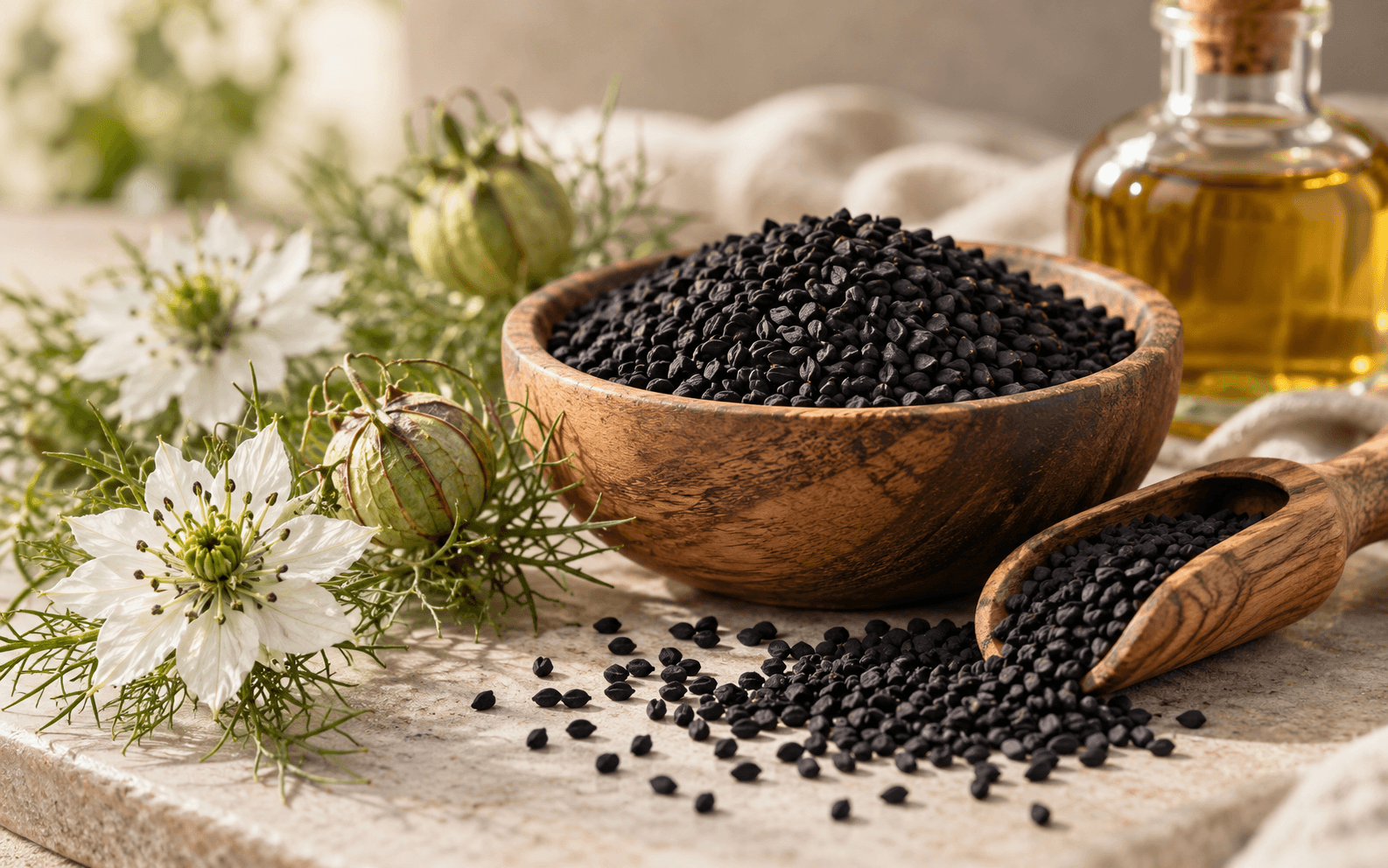
Are black seed oil and black cumin seed oil the same?
Often, yes. Nigella sativa is widely referred to by common names including black seed and black cumin. Kew Science lists “black cumin seed” among common names associated with the species, and Memorial Sloan Kettering also lists black cumin and black seed as common names for Nigella sativa.
So a bottle labeled “black seed oil” and another labeled “black cumin seed oil” may both be referring to oil from Nigella sativa.
Why can the naming be confusing?
Common plant names are not always unique. The word “cumin” is used in several culinary and regional naming traditions, and different plants can be sold under similar-sounding names.
That is why the botanical name is more useful than the front-label marketing name when you are trying to identify the actual species.
If the ingredient list clearly identifies Nigella sativa, you know which botanical species the oil is intended to come from.
Is Nigella sativa the same plant as ordinary cumin?
No. Ordinary culinary cumin is Cuminum cyminum, a different species in the Apiaceae family. Nigella sativa belongs to the Ranunculaceae family.
Similar common names do not make the plants botanically equivalent.
What should you look for on a bottle?
- Botanical name: Nigella sativa.
- A clear ingredient list.
- Processing information such as cold-pressed or refined.
- Storage instructions.
- Transparent testing information when a brand makes testing claims.
Hadith Organics identifies its oil as 100% Nigella sativa oil so the botanical identity is clear regardless of which common name a customer is familiar with.