
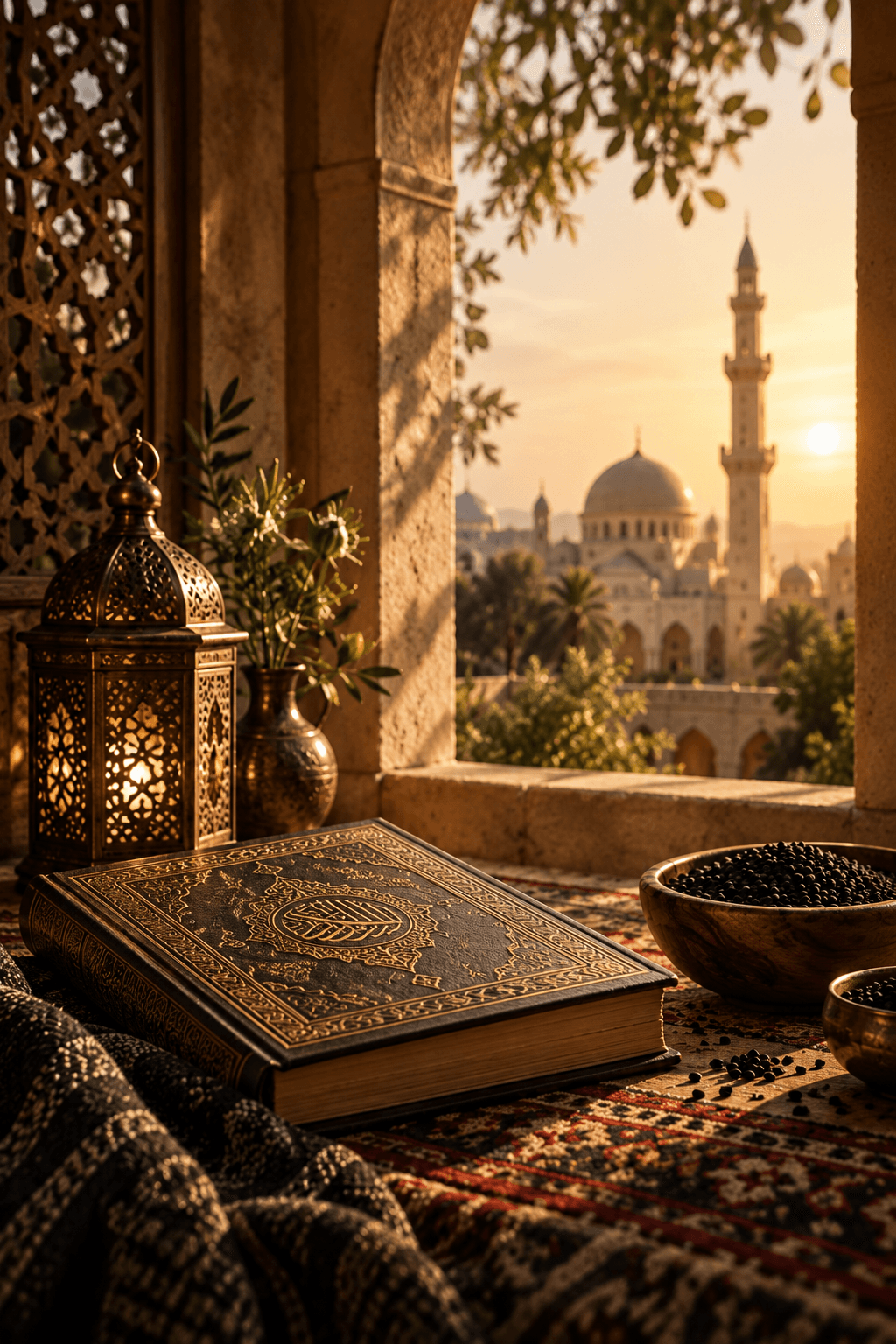
The hadith behind black seed.
Black seed is mentioned in well-known narrations recorded in both Sahih al-Bukhari and Sahih Muslim. In Sahih al-Bukhari 5688, Abu Huraira narrates that the Prophet Muhammad ﷺ spoke about healing in black seed except death. Sahih Muslim 2215 records the same tradition with closely related wording.
Literally, “the black seed.” The tradition has remained culturally important across Muslim communities for generations.
Why has black seed remained important?
The hadith gives black seed a religious and cultural significance that predates contemporary supplement and wellness trends. That heritage is one reason black seed is familiar in households across many Muslim communities.
The name Hadith Organics intentionally acknowledges that history. The brand does not need to invent a modern mythology around the ingredient; the tradition already has meaning.
Is “black seed” the same as Nigella sativa?
In modern botanical labeling, Nigella sativa is the accepted species name used for the plant commonly sold as black seed, black cumin seed or black caraway in different markets. Kew Science places the species in the Ranunculaceae family.
Because common names can overlap, using the botanical name on a product label is one of the clearest ways to identify the ingredient.
Tradition is not the same as a medical claim.
Religious tradition and modern clinical evidence answer different questions. Quoting the hadith faithfully does not mean a bottled oil should be marketed as a guaranteed treatment or cure.
Hadith Organics therefore presents the hadith as part of the ingredient’s Islamic heritage while keeping modern product claims separate, transparent and evidence-based.